Leave Your Message
In the fast-paced and ever-changing global economy, sourcing quality cubicles for a multitude of workspaces is faced with unique challenges. With more businesses moving toward productivity and collaboration, the demand for innovative office solutions has surged. On any given project, organizations have to account for the various factors involved in selection, such as materials, design, technology integration, and ergonomics, all of which bring their workspace into compliance with the specific needs of their workforce. If not otherwise strategically managed, this whole process becomes extremely tedious and, therefore, passes on the burden of delays, high costs, and poor quality decisions on to the customer.
Guangdong Junshi Intelligent Furniture Co., Ltd. is concerned about the provision of smart office solutions that blend advanced technology with ergonomic design. Guided by this corporate philosophy, its specialized R&D team dedicates itself to the designing of intelligent workspace systems for governments, enterprises, and institutions, considering employees' health and well-being and productivity. This paper focuses on these challenges in sourcing quality cubicles for global workspaces and offers useful insights and approaches that can help organizations overcome these obstacles and create ideal working conditions.
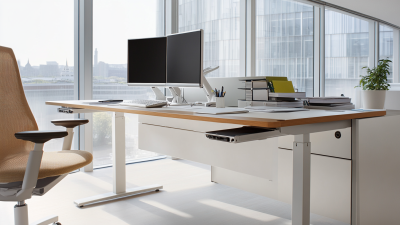
The search for quality cubicles has gradually become a harder endeavor with the growing internationalization of work. When dealing with the sourcing of cubicles, organizations must give preference to those important characteristics which address the varying needs of their workforce usually scattered to different geographical boundaries. One such consideration is adaptability: i.e., cubicles should manage adaptability to accommodate several layouts or office configurations, maximizing the area against individual firm specifications. Another characteristic to consider is ergonomics. With employees spending so many hours at workstations, it's crucial for cubicles to promote occupants' physical health. This includes the provisions of height-Adjustable Desks, proper chair heights, and enough movement space. It is also helpful to integrate soundproofing elements in the cubicle design to prevent distractions from ambient noise, allowing cubicles to remain an oasis for concentrated work. Finally, a major consideration in the selection of quality cubicles is their sustainability. With rekindled interest in environmental sustainability, the sourcing of materials that are sustainable and recyclable is the display of corporate social responsibility and caters to the sensibilities of environmentally conscious employees. Finding a balance between functionality, comfort, and sustainability in the design of cubicles will enable organizations to build workspaces that increase collaboration and satisfaction of their global teams.
How organizations might influence each other through different preferences for cubicles in workplace design across cultures. As an example, many Western countries prefer open-plan offices and collaborative spaces compared to cubicles because their cultures are geared towards teamwork and transparency. But cultures such as many parts of Asia may favor cubicles as they are more focused on privacy or individual work. This particular preference conflicts at times for organizations attempting to build workspace alignment across cultures to the advantage of productivity gains.
Material selections, color palette, and even placement of cubicles in a workspace may not only be so-called values that represent cultures but also characteristics that manifest norms. In parts of the world where nature matters most, wooden finishes or biophilia work well in creating a comfortable environment. In high-tech dimensions, great newness succeeded in contemporary sleek equipment designs. They are more acceptable in urban areas where innovation drives the culture. Thus, advises that cultural preferences count not only for aesthetics but also to employee satisfaction and engagement vis-à-vis diverse teams.
In short, to be fact, the workspace design might end up being completely inappropriate, and employees may view it as uncomfortable or odd, which in turn leads to low productivity rates. Hence, involving local stakeholder interests in workspace design will go a long way toward successfully achieving these ends through in-depth survey or research regarding the preferences of workplace design. Then ultimately, cubicle design becomes appreciably enhanced from a cultural perspective, thus enriching the workspace and enhancing team building and collaborations on a global scale.
Sourcing quality cubicles for global workplaces is becoming even harder due to convoluted supply chain challenges. Existing conditions of global trade, influenced by tariffs and geopolitical tensions, create hardly a favorable environment for sourcing any material without careful balancing. The ongoing U.S.-China trade war has slapped tariffs on several products, and companies are now reassessing their procurement strategies. The rising prices and lengthy lead times foisted upon them are also products of the changing landscape.
Rolls-Royce and other manufacturers have stated that supply chain problems will remain for some years to come, especially within the aerospace industry. This outlook resonates across industries, as experts forecast limited recovery in the supply chain but sustaining volatility throughout the operations in 2024. Thus, firms must therefore remain quick and nimble, pursuing innovative solutions and reworking their sourcing paradigms to beat the odds stacked against them.
In such an environment, emerging technologies like generative artificial intelligence arguably present one of the potential opportunities to exploit for procurement management. AI liberates value streams on design processes to do better operations and forecasts, which means its implications for firm sourcing are better decisions. Thus, with the quest for quality cubicles for workplaces, these supply chain dynamics would need to be well-understood and adapted for smooth and efficient material acquisition.
Sourcing quality cubicles for global workspaces means looking at design, functionality, and, at times, an understanding of sustainability standards in manufacturing. As corporations work to reduce their environmental footprints, the assessment and selection process of cubicle suppliers ought to be weighted toward those practicing sustainable operations, including evaluating materials, manufacturing processes, and the lifecycle of products.
One of the major hurdles to measure sustainability standards is that there is no common certification process. Different organizations offer different certifications that confuse buyers, not knowing which ones are trustworthy. In this context, for instance, LEED (Leadership in Energy and Environmental Design) looks at energy efficiency and sustainable site development, whereas Greenguard checks for the reduction of chemical exposure in the workplace. In summary, it is imperative for corporations to be able to distinguish between these certifications so that they can make informed decisions when purchasing.
Another pillar that promotes trustworthiness in the sustainability claim is supply chain transparency. Manufacturers willing to discuss the sourcing and production of their goods are more likely to be held accountable for their environmental impact. This guarantees trust from clients and further facilitates a responsible culture within the industry. As organizations incorporate sustainable cubicle solutions into workspace planning, they play a role in the larger scheme of environmentally friendly business practices.
The ergonomic principle must take the highest priority in deciding on cubicles for global workplace settings. An ergonomic cubicle design keeps employees comfortable and enhances productivity at the same time while preventing injuries at work. Remote and hybrid working scenarios have made the creation of an inviting environment promoting employee well-being more important than ever.
Ergonomics in the office cubicle sense expands beyond the Adjustable Chairs and desks. It accommodates the entire surroundings of the workplace. Items to reduce strain should be readily available to employees, for example, monitors should be at eye level, keyboards should be placed so that the wrist is aligned closely with the forearm, and so on. Adequate lighting and space for workers to be able to move easily in their space and reduce any noise disturbance is very conducive to a healthy workplace ambiance that enables employees to focus and perform at their best.
In a very competitive market, companies have to fight hard to attract and retain talent; therefore, ergonomic cubicles are not mere luxury items but necessities. Health and comfort of employees lead to decreased absenteeism and increased job satisfaction and engagement. Thereby, it is upon the global companies to consider ergonomic principles in the sourcing of cubicles for the creation of a supportive environment for employee performance.
When designing cubicles for global workplaces, the major challenge an organization faces is that of balancing cost with quality. Cubes become more than just partitions-somehow-brand, values, and the overall work environment for an organization. It calls for unique and strategic approaches on the part of such companies that ensure financial sustainability coupled with the functional needs of their employees during such a complicated procedure.
One great strategy is to provide a clear specification before initiating the procurement process. Ergonomics, sound damping, and modularity are a few key features that businesses can develop on which to base their standardized evaluation criteria for potential suppliers. It is a narrowing approach without compromising quality. Involving employees in the selection process will create more satisfaction with the final product, as that way they are more likely to feel that their opinions count when it comes to something that is primarily meant for their use or enjoyment, which can influence productivity and morale around the office a lot.
Furthermore, value-for-money over the short initial costs can encourage more sustainable decision-making. Quality materials and designs require hefty investments upfront; however, they usually yield lower maintenance costs and cause durability improvements. Organizations should also seek ties up with manufacturers who give importance to sustainable manufacturing practices alongside providing great insights on how to cost-effective designs without compromising their quality standards. By doing so, companies can meet the budget requirements for a high-quality workspace.
In a world that is now fast becoming globalized, workspace planning and sourcing are gaining more and more complexity due to the multiple options and varying standards of quality in different regions. Most times, companies contend with sourcing quality cubicle designs that meet the aesthetics but do not comply with functional considerations for ball. Technology should be able to streamline these processes, thereby tailoring what has been traditional workspace management practices into modern ones.
Undoubtedly, one of the most significant technological advancements is digital design tools and software allowing businesses to create virtual layouts of their respective office spaces. Such platforms empower decision-makers to visualize the end result of a workspace even before making any purchases, ensuring that cubicles purchased fit effortlessly into the design scheme and serve their intended function. Another advanced algorithm determines spatial requirements based on employees' needs, leading to the best possible combinations of space configurations for productivity and collaboration.
Online sourcing platforms provide an avenue for companies to connect to a variety of suppliers from around the globe. Sourcing through these platforms ensures product quality can be compared in terms of price and availability in real-time, enhancing transparency in the sourcing process and ensuring decisions made by organizations are informed. Accordingly, companies, given the right technology needed, are able to mitigate the challenges presented with respect to the sourcing of cubicles, and thereby create beautiful working spaces that embody their brand values and promote the mental well-being of employees.
Tracing quality cubicles for international workspaces has its own unique challenges, but working with international suppliers has been proven time and again to find the best possible solution. Among the good practices that enhance the chance of collaborative success is keeping clear, open lines of communication. This involves setting expectations early on their requirements for timelines, design specifications, and quality standards. Using video calls and project management software can immensely add to the timely discussions and updates along with the presentation through which all parties involved in the particulars will be correctly aligned throughout the sourcing process.
It is also important to conduct a thorough investigation of potential supplier profiles. Finding partners that have positive references from earlier clients is best. Creating contacts with suppliers that understand the cultural specificities of your particular target region may help as well. Commonality concerning views and clarity will lead to better results during negotiation and less difficult sourcing. It has to do with organizing follow-up discussions to check possible advancement, identify issues, and share feedback for an atmosphere of teamwork and mutual respect to develop.
Technology could also enable source improvement. Designing virtually makes possible the visualization of cubicles personalized in real-time as it is being adjusted for convenience and efficiency. Another idea is to have a single panel to track orders and communications, which might minimize ambiguity and delay. This sums up the best practices in making organizations adapt to the complexities of global sourcing regarding the development of high-quality cubicles.
A very common challenge when dealing with international dealers is the acquisition of quality cubicles in global workspaces. But such partnerships can yield fruitful results when properly established. One of the good practices of such collaboration is having clear and open communication. This includes ensuring that all expectations around timelines, design specifications, and quality standards are set from the beginning. In this regard, having video calls and project management tools can speed up real-time discussions and updates through which all parties involved in the particulars will be correctly aligned throughout the sourcing process.
Research needs to be done on potential suppliers, as well. Suitable partners will thus have proven track records and positive references from past clients. Such relationships with suppliers who can feel the cultural specificities of your particular target region may also help. Commonality concerning views and clarity will lead to better results during negotiation and less difficult sourcing. A check-up event really will be held to discuss progress, troubleshoot problems, and share some feedback toward the development of a feeling of concert and respect.
Last but not the least; technology could also facilitate the improvement in sourcing. Virtual designing allows the user to visualize customized cubicle structures in real time with adjustment convenience and efficiency. Another idea is to have a single panel to track orders and communications, which might minimize ambiguity and delay. This thus forms the best practices that make organizations able to cope with the complexities of global sourcing with regard to the developments in high-quality cubicles.
Essential features include adaptability for various layouts, ergonomic design for physical well-being, soundproofing for concentration, and sustainability through eco-friendly materials.
Ergonomic design is crucial because it supports employees' physical well-being, allowing for adjustable desks, proper chair height, and adequate space for movement, which is vital for comfort during long hours of work.
Soundproofing minimizes distracting ambient noise, creating a focused work environment that can boost concentration and overall productivity.
Organizations should prioritize sourcing sustainable and recyclable materials for cubicles to demonstrate corporate social responsibility and attract environmentally conscious employees.
Companies can balance cost and quality by establishing clear specifications, involving employees in the selection process, and considering long-term value over initial costs.
Involving employees can lead to greater satisfaction with the final product, positively influencing productivity and workplace morale.
Strategies include defining essential features before procurement, evaluating suppliers based on specific criteria, and exploring partnerships with manufacturers focused on sustainable practices.
While high-quality cubicles may incur higher upfront costs, they often result in lower maintenance expenses and enhanced durability over time.
Cubicles are not just functional partitions; they reflect the company's brand, values, and overall work environment, influencing employee perceptions and brand identity.
By balancing functionality, comfort, and sustainability in cubicle design, organizations can create workspaces that promote collaboration and satisfaction among global teams.