Setting up an effective study space is such a game-changer when it comes to boosting your learning and staying productive. I remember reading somewhere that Dr. Emily Carter, who’s pretty much an expert in educational strategies at the Learning Optimization Institute, mentioned that a neat, well-organized study area doesn’t just make things look tidy — it actually helps you remember stuff better too. In today’s super busy world, both students and professionals are always on the lookout for ways to get more done in less time. Putting some effort into creating a well-structured study spot is definitely a big part of that puzzle.
The idea of a "study table" really boils down to making a space that’s intentional and tailored to your style. When you personalize your workspace, it’s easier to stay focused and be more efficient. Plus, as learning keeps changing, it’s smart to tweak your habits and tools so they suit your goals better. Basically, investing a little time into setting up a good study environment isn’t just about organization — it’s about setting yourself up for success.
So, in the end, creating a really effective study table isn’t just about neatness; it’s an investment in your learning journey. When you bring in some proven tips and really think about how your space impacts your focus, you’re setting the stage for more productive, enjoyable learning sessions. Trust me, it’s totally worth it!

Understanding the Importance of a Study Table for Learning
A study table serves as a dedicated environment where students can focus and engage with their learning materials, significantly impacting their productivity and retention. According to a report by the National Training Laboratories, engaging with material through study methods that promote active learning—such as summarization and self-testing—can increase retention rates to 60% or more, compared to only 10% for passive reading. Thus, a well-organized study table that facilitates these methods can be crucial for effective learning.
Moreover, a study by Princeton University highlights that students who study in a designated space tend to perform better academically. The discipline of associating a specific location with learning helps to create a mental framework that enhances information recall. This is particularly important in today’s fast-paced educational environments, where distractions are ubiquitous. A study table, therefore, becomes more than just a piece of furniture; it is an essential tool that fosters a conducive learning atmosphere, promotes focused study habits, and ultimately leads to improved educational outcomes.
Identifying Your Learning Goals and Objectives
Setting clear learning goals and objectives is essential for creating an effective study table that enhances productivity. Research has shown that individuals who define their learning targets are significantly more likely to achieve academic success. According to a study published by the Educational Psychology Review, setting specific and achievable goals can boost motivation and self-regulation, leading to improved performance and deeper understanding of the material. By outlining what one aims to learn or achieve, students can create a more focused study plan that aligns with their personal objectives.
To start, individuals should assess their current knowLEDge and identify areas that require improvement. This process involves reflecting on both short-term and long-term goals. A report from the American Psychological Association indicates that students who utilize techniques like SMART goals—Specific, Measurable, Achievable, Relevant, and Time-bound—tend to see a 20% increase in their ability to follow through on study commitments. By incorporating these principles into their study table, learners can prioritize subjects, allocate sufficient time for each task, and track their progress over time, ultimately fostering a more productive learning environment.
How to Create an Effective Study Table for Better Learning and Productivity
| Study Technique | Learning Goal | Objective | Time Allocation |
| Pomodoro Technique | Improve focus | Complete study material | 25 minutes study, 5 minutes break |
| Mind Mapping | Enhance memory retention | Visualize concepts | 1 hour |
| Active Recall | Boost information retrieval | Test understanding | 30 minutes |
| Feynman Technique | Clarify concepts | Teach the material | 2 hours |
| Spaced Repetition | Maximize memory retention | Review learning material | 15 minutes daily |
Choosing the Right Location for Your Study Table
Choosing the right location for your study table is fundamental to enhancing both learning and productivity. Research indicates that the environment in which we study can significantly impact our ability to concentrate and retain information. A study by the Environmental Psychology journal shows that a well-organized and quiet study area can increase productivity by up to 25% compared to cluttered or noisy settings. Therefore, investing time in selecting an optimal location can yield substantial benefits for students and professionals alike.
When it comes to choosing a location, consider factors such as natural light, noise levels, and overall comfort. Natural light, for instance, has been found to improve mood and energy levels, which in turn aids focus. According to a report from the American Society of Interior Designers, spaces that incorporate daylight can help enhance alertness and cognitive function. Moreover, finding a quieter spot—away from distractions like television or frequent foot traffic—can further improve your study efficiency.
Tips for enhancing your study table location include:
- First, seek out places with ample natural light to boost your mood and focus.
- Second, ensure that your chair and table are ergonomically designed for comfort, which can prevent fatigue during long study sessions.
- Lastly, consider personalizing your study space with motivational quotes or plants, as studies show that a pleasant environment can increase enthusiasm and commitment to tasks.
Selecting Essential Tools and Materials for Effective Studying
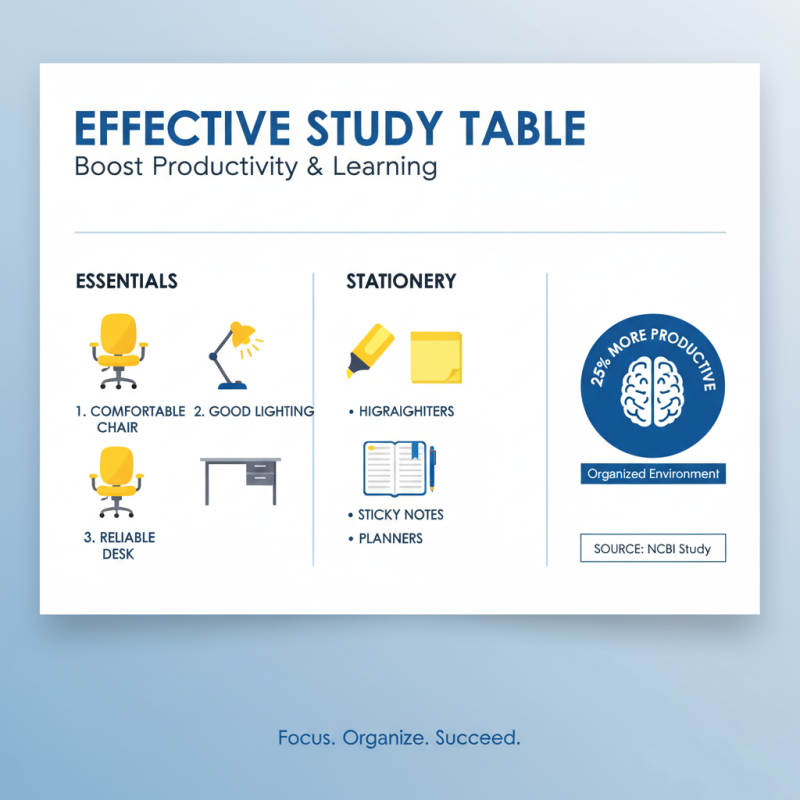
Creating an effective study table is essential for enhancing learning and productivity. The right tools and materials can significantly impact concentration and retention. According to a study by the National Center for Biotechnology Information, students who organize their study environment effectively are 25% more productive. Essential tools for your study table include a Comfortable Chair, good lighting, and a reliable desk. Additionally, keeping essential stationery—such as highlighters, sticky notes, and planners—within reach can facilitate a more focused study session.
Incorporating digital tools can also optimize your study experience. Utilizing apps for time management, such as Pomodoro timers, has been shown to increase information retention rates by up to 60%. It's important to choose tools that resonate with your learning style, be it visual, auditory, or kinesthetic. Remember to invest in noise-canceling headphones if you're easily distracted by surrounding noise.
Tips:
1. Organize materials by subject on your study table to minimize the time spent searching for resources, which can disrupt your concentration.
2. Adjust the positioning of your study tools to reduce strain on your body; positioning screens at eye level and keeping books at a comfortable angle can prevent physical discomfort and boost study duration.
Designing an Organized and Functional Layout for Your Study Space
Creating an organized and functional layout for your study space is crucial for enhancing focus and productivity. Start by choosing a quiet area with minimal distractions, allowing for a seamless flow of concentration. Ensure that your desk or study table is spacious enough to accommodate your essentials, such as textbooks, notebooks, and stationery. Position your chair for ergonomic support, as a comfortable seating arrangement can help you maintain focus for longer periods.
Next, consider the arrangement of items on your study table. Place frequently used materials within arm's reach while keeping less necessary items stored away to minimize clutter. Utilize organizers or drawer dividers to categorize your supplies, making it easier to find what you need without wasting time. Incorporate proper lighting, such as a desk lamp, to reduce eye strain and create a pleasant ambiance, making study sessions more enjoyable.
Lastly, add personal touches, like motivational quotes or plants, to create an inspiring atmosphere that encourages you to engage with your studies actively.
Establishing a Study Schedule and Time Management Techniques
Creating an effective study schedule is essential for enhancing learning and productivity. First, assess your current commitments and determine when you are most alert and focused. Allocate specific time blocks for studying that align with your energy levels, whether you prefer early mornings or late evenings. It’s important to set realistic study goals within these blocks. For example, rather than trying to cover an entire subject in one sitting, break it down into manageable sections, focusing on one topic at a time to avoid feeling overwhelmed.
Incorporating time management techniques can significantly boost your productivity. Utilize methods like the Pomodoro Technique, where you study for 25 minutes followed by a 5-minute break. This approach helps maintain concentration and provides regular intervals for rest, making it easier to sustain your focus over extended periods. Additionally, consider keeping a planner or digital calendar to visualize your study schedule. By consistently reviewing your progress and adjusting your plan as needed, you can ensure your study table remains organized and effective for your learning endeavors.
Incorporating Health and Comfort into Your Study Environment
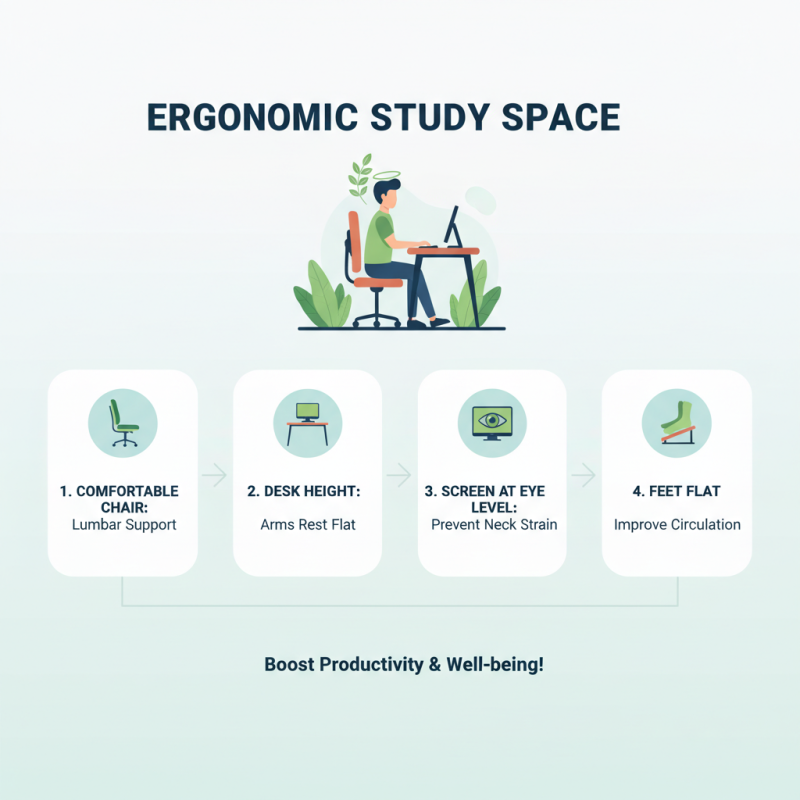
When creating an effective study table, incorporating health and comfort into your study environment is crucial for enhancing productivity and learning. A well-designed study space should prioritize ergonomic principles that support your posture and reduce physical strain. Invest in a comfortable chair that provides sufficient lumbar support and consider a desk at an appropriate height to allow your arms to rest comfortably while typing or writing. Position your computer screen at eye level to minimize neck strain, and keep your feet flat on the ground or supported by a footrest, promoting better blood circulation.
In addition to ergonomic furniture, the ambiance of your study area can greatly impact your ability to concentrate. Natural lighting is ideal, as it not only reduces eye strain but also helps regulate your mood and energy levels. When it's not possible to utilize natural light, opt for warm, adjustable lighting that creates a calming atmosphere. Incorporating plants or natural elements can also improve air quality and provide a soothing touch to your environment. Lastly, keeping your study area organized and free from distractions promotes a sense of control and focus, allowing you to create a conducive environment for effective learning.
Revitalizing Workspace Elegance: The Lacquered Office Coffee Table as a Symbol of Modern Craftsmanship
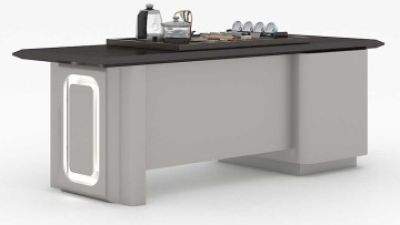
In today’s fast-paced business environment, the fusion of aesthetics and functionality in Workspace Furniture has become paramount. The lacquered office coffee table stands as a testament to modern craftsmanship, combining elegance with practical utility. With its mirror-level glossy texture, this piece not only enhances the visual appeal of a corporate setting but also conveys a sense of sophistication and professionalism. The polished surface creates a delightful play of light, reflecting the dynamic energy of the workspace, while its warm, jade-like touch invokes a feeling of comfort and class.
Integrating seamlessly into various office scenarios, this lacquered coffee table is crafted to meet the demands of high-end corporate procurement. Its design prioritizes safety and environmental considerations, ensuring that it is not just a visual centerpiece but also a responsible choice for modern businesses. The table's impressive features include anti-fouling, corrosion resistance, and ease of cleaning, making it ideal for handling everyday spills, from coffee to tea. Supported by a sturdy steel frame, it promises stability for all types of business gatherings, allowing for the placement of necessary tools and equipment without concern.
With the ability to customize sizes and adapt to diverse spaces—be it a chairman's office or a casual parlour—the lacquered coffee table is an embodiment of flexibility. Its chic design and practical innovations reinforce its role as a sophisticated social tool in business settings, making every negotiation and meeting not only productive but also stylishly executed. As companies strive to create spaces that reflect their values and professionalism, this piece emerges as a crucial element in revitalizing workspace elegance.
FAQS
: The right tools and materials can significantly impact concentration and retention, making students more productive.
Essential items include a comfortable chair, good lighting, a reliable desk, highlighters, sticky notes, and planners.
Digital tools like time management apps, including Pomodoro timers, can help increase information retention rates and optimize study sessions.
Organize materials by subject to minimize time spent searching for resources, which helps maintain concentration during study sessions.
Choose a quiet area with minimal distractions, ensure your desk is spacious, and position your chair for ergonomic support to maintain focus.
Position screens at eye level and keep books at a comfortable angle to prevent physical discomfort and boost study duration.
Incorporate proper lighting, such as a desk lamp, and add personal touches like motivational quotes or plants to create an inspiring atmosphere.
Keeping frequently used materials easily accessible minimizes clutter and prevents interruptions during study sessions.
Proper organization helps reduce distractions, allowing for a more focused and efficient study experience.
Adding motivational quotes or plants can create a more engaging and inspiring environment that encourages active study.
Conclusion
Creating an effective study table is essential for enhancing learning and productivity. The study table serves as the focal point of your study environment, and understanding its importance is the first step towards achieving your learning goals and objectives. By identifying what you aim to accomplish, you can tailor your study space to support these goals.
Finding the right location for your study table is crucial; it should be free from distractions and conducive to focus. Additionally, selecting essential tools and materials will enhance your studying efficiency. An organized and functional layout helps streamline your study sessions, while establishing a study schedule aids in time management. Finally, incorporating health and comfort elements into your study environment will ensure you remain productive and engaged. Overall, a well-thought-out study table setup can significantly improve your learning outcomes.